
National professional learning program
Professional learning for teachers of students with IEPs, grades 6–8.
cei MERIDIAN USA is a nationally recognized, arts-integrated professional learning program that shows teachers how to utilize music and visual art as effective instructional strategies to directly teach literacy.
Overview
A nationally recognized, arts-integrated program.
This robust online program, held on Zoom, includes a highly differentiated literacy curriculum of music and visual art projects that address the same academic skills and social studies content of U.S. History / patriotic education. It serves classroom and literacy teachers of grades 6–8 students with IEPs, from districts nationally, and includes professional learning workshops, PLC sessions, and project-modeling videos.
In addition to a vibrant professional learning program with teachers nationally, cei MERIDIAN USA also creates arts-integrated curricula, disseminates the work, and partners with the Council for Exceptional Children and the Gilder Lehrman Institute of American History.
The program
27.5 hours of professional learning, on Zoom
two-hour PD workshops
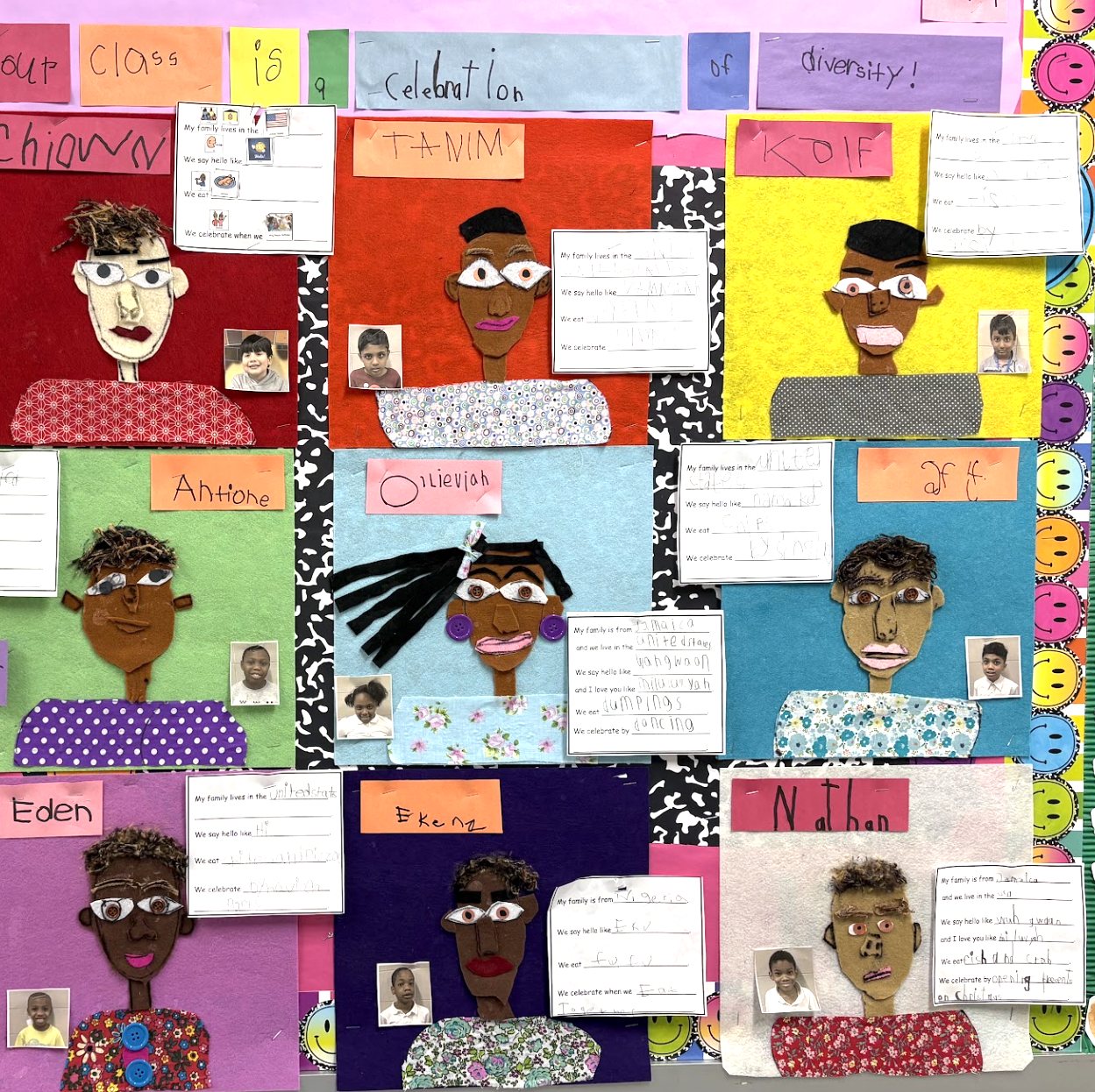
These hands-on workshops provide teachers with a comprehensive understanding of the value of utilizing an arts-integrated approach. Teachers have access to six differentiated versions of our arts-integrated curricula, which include curriculum maps, lesson plans, classroom-implementation slide decks and a project resource guide. During these workshops, teachers learn and customize one literacy-through-music project and one literacy-through-visual art project that they implement with their students.
one-hour PLC sessions
As teachers implement our arts-integrated projects in music and visual art with their students, they are supported by fellow teachers, a Teacher Leader (a former teacher in the program) and CEI Arts Educators during PLC sessions at which they present the successes and challenges of implementation.
45-minute project-modeling videos
Teachers view project-modeling videos which outline each project in detail and delineate the modifications between the six differentiated curricular versions of each project.
Pedagogy
Why teaching literacy through the arts works.
The value of using an arts-integrated approach
The program presents an alternative to the traditional ways of teaching literacy. Using visual art and music to teach core content can engage more students who don't respond to traditional teaching methods. Based on a wide range of research, including Howard Gardner's Theory of Multiple Intelligences, our core principle is that individuals naturally receive, learn, and understand information and concepts in different ways through the senses. Students who are auditory learners may need to HEAR something to comprehend it, so may respond to learning content through music — while students who are visual learners may need to SEE something or have it represented visually to fully understand it, so visual art can be a conduit for learning academic content.
Teaching the same core content through two art modalities
The program presents the exact same literacy skills, using the social studies content of U.S. History / patriotic education, through innovative, hands-on music and visual art projects. By teaching the same content through music and visual art, teachers engage more students in their academic curricula.
The importance of using highly differentiated instruction
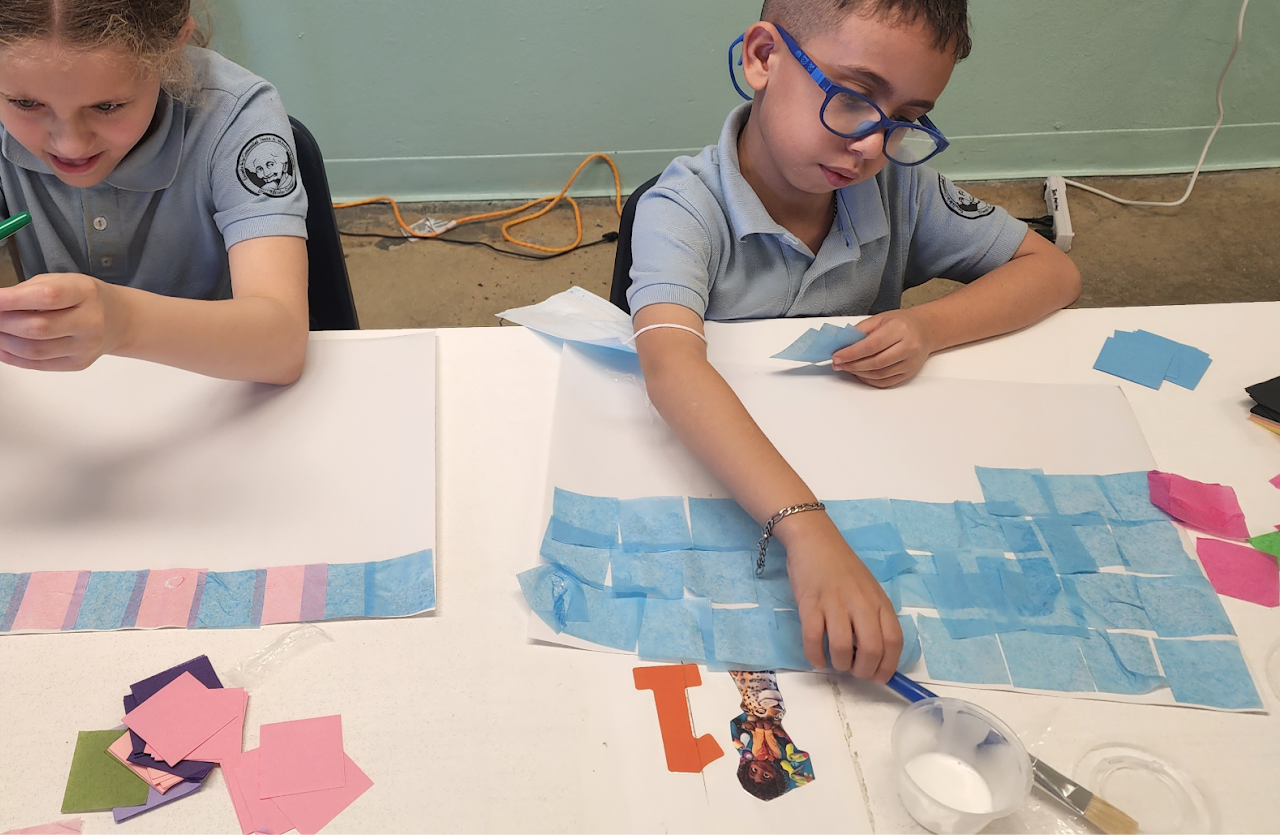
The cei MERIDIAN USA curriculum includes six curricular versions of every project to meet the needs of all students of varying learning levels in a heterogeneous classroom. The six project versions are designed to challenge every student at their level — from students who are early learners, nonverbal, alternately assessed, and working towards the standards, to students who are standardized-assessed and performing on grade level. By selecting the appropriate project versions for their students, teachers can easily differentiate instruction at every step of a project. Ultimately, students create the same academic-based music and visual art projects at their level. Materials include curriculum maps, lesson plans, classroom-implementation slide decks, student worksheets, and project resource guides.
Differentiation
Six versions of every project.
| Grade band | Students working towards the standards | Students meeting the standards | ||||
|---|---|---|---|---|---|---|
| Grades 6–8 | Early Learner | Intermediate Learner | Advanced Learner | Grade 6 Learner | Grade 7 Learner | Grade 8 Learner |
The six project versions challenge every student at their level — from early learners, nonverbal and alternately assessed students working towards the standards, to students who are standardized-assessed and performing on grade level. Ultimately, students create the same academic-based music and visual art projects at their level.
Impact & results
Independently evaluated, with statistically significant gains.
This program is an expansion of CEI MERIDIAN, a federally funded program with classroom teachers of students with IEPs from across the country. External Evaluator Metis Associates has conducted an ongoing evaluation of the program model's impact on students and teachers. To date, Metis has found important statistically significant results regarding increases in student and teacher outcomes.
“Art brings math to life and makes a normally abstract subject tangible. The lesson plans provide ways to differentiate or modify if necessary and the project is aligned specifically with the standards.”
“I absolutely loved the project and so did my students. My students absorbed and retained so much knowledge about the butterfly life cycle including complex vocabulary words like 'metamorphosis.' Student engagement was at an all-time high during every lesson. They looked forward to the lessons and counted down the days until our big performance! I compiled all the pictures and videos from the project and created a video slideshow. The kids were so excited and proud to see their hard work and performance in the video, and my administrators were very proud of our students as well. I posted the video on the school's social media page and got really sweet feedback from parents.”
“My students and I loved the project. I have some students who said they love to paint and even developed skills they didn't have before. I have a non-verbal student who I discovered is very talented and enjoys painting. Painting keeps him focused. Also, I did not know how to integrate music into our Spanish class, it was something that I did not see possible and today I was able to understand that it is possible.”
“A mí y mis estudiantes nos ha encantado el proyecto. Tengo unos estudiantes que han dicho que les encanta pintar e incluso han desarrollado habilidades que no tenían. Tengo un estudiante no verbal que he descubierto que tiene mucho talento y disfruta cuando pinta. El pintar lo mantiene enfocado. También, yo no sabía cómo integrar la música en la clase de español, era algo que no veía posible y hoy pude entender que se puede.”
“I can already see students who are interested in the songwriting activity. I feel that I should be incorporating the songwriting activity in our future lessons to capture the interests of our students. Thank you for initiating this project!”
Program history
Built on two competitive federal grants.
Assistance for Arts Education Development and Dissemination (AAEDD)
Office of Innovation and Improvement, US Department of Education
Assistance for Arts Education (AAE)
Office of Elementary and Secondary Education, US Department of Education
For more information
Contact CEI Arts Education
The Center for Educational Innovation (CEI) is an educational nonprofit 501(c)(3) organization. CEI believes the school should be the center and driving force of public education, innovation, and reform. Every child deserves a quality education.
With a focus on equity and innovation, CEI works directly with school leaders, teachers, students, and families to create high-performing schools in under-resourced communities to help all children succeed.
Partner with CEI
Support arts-integrated learning for students with IEPs.
Your gift funds tutoring, mentorship, the arts, esports, robotics, and the coaching that helps schools transform. Every dollar goes back into classrooms.