

Grades K–5 curriculum
Use music and visual art to teach math, literacy and SEL skills
A free, highly differentiated, arts-integrated curriculum for classroom teachers of grades K–5 students with disabilities.
The Meridian curriculum
Paired projects: the same skills, two art forms.
Teach literacy through the arts
Students create a BUTTERFLY POP-UP BOOK or write a BUTTERFLY SONG to explore literacy.
Teach math through the arts
Students create an ARTISTIC MOBILE or a GEOMETRIC PERCUSSION COMPOSITION to explore geometry.
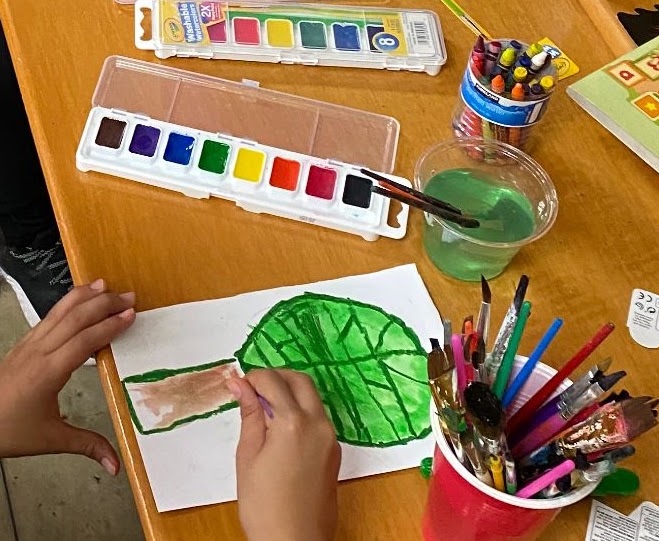
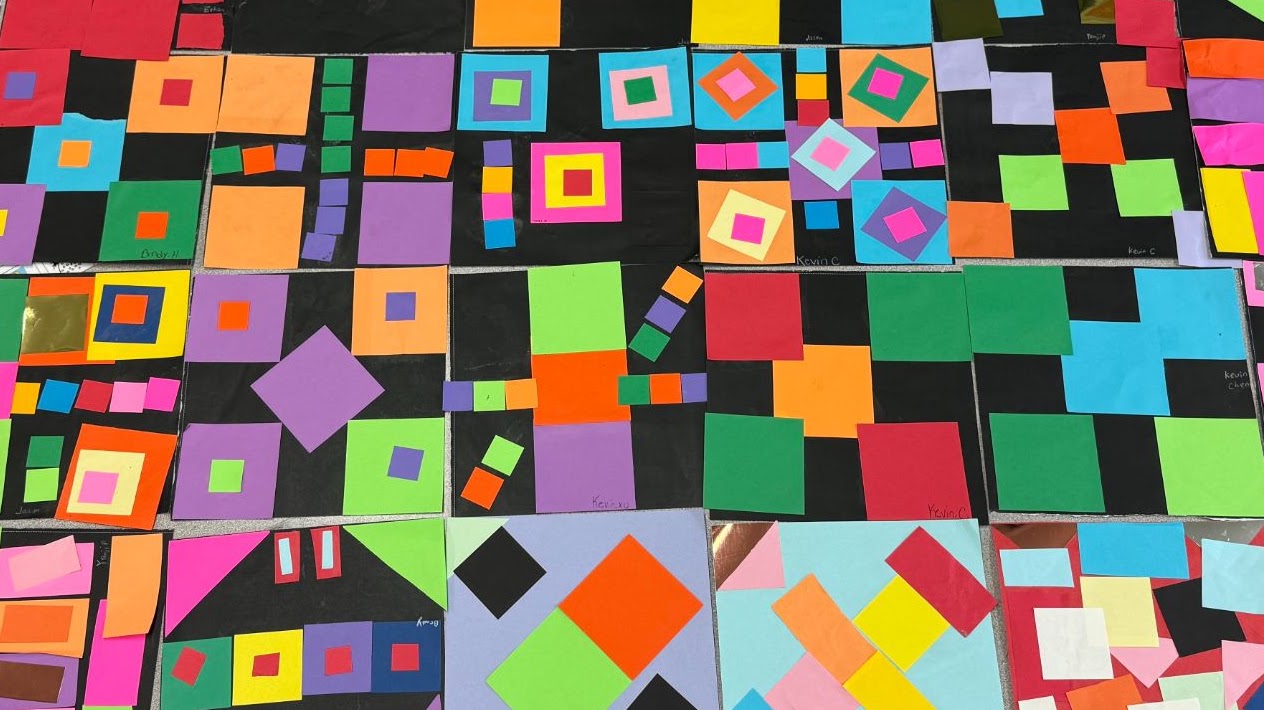
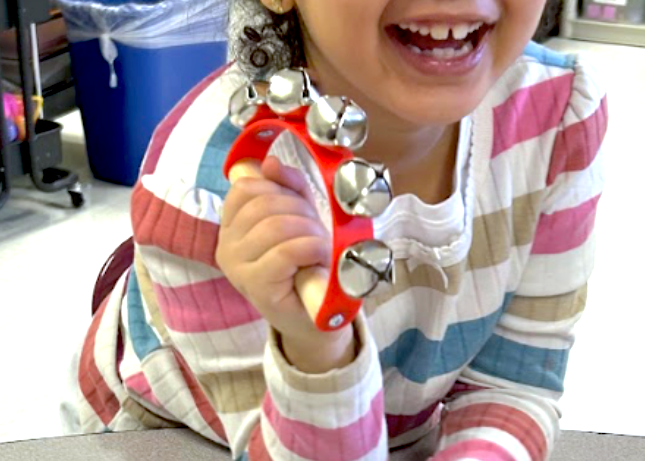
“98% of students increased their literacy scores using the Meridian projects.”
What is the Meridian program?
A federally funded professional learning program.
The Meridian curricula was developed as part of CEI's Meridian program, a comprehensive professional learning program funded by an Assistance for Arts Education (AAE) grant from the United States Department of Education's Office of Elementary and Secondary Education.
- ●Innovative, highly differentiated, arts-integrated curricula that use music and visual art as effective instructional strategies to directly teach literacy, math and SEL skills.
- ●Professional learning workshops and PLC sessions with K–5 classroom teachers of students with disabilities from New York (NY), San Juan (PR), Baltimore (MD), Bridgeport (CT) and Rochester (NY), in which they learn and implement the Meridian curricula.
- ●An annual national arts education conference.
- ●Tracking of the implementation of the curricula and its impact on students and teachers — based on research conducted by an external evaluator, the program has yielded statistically significant results regarding increases in student and teacher outcomes.
- ●Presentation of the Meridian curricula on a digital platform for dissemination to teachers nationally.
- ●The support of dissemination partners Council for Exceptional Children (DARTS) and WestEd.
Education Through Art
Built on a decade of federally funded work.
The Meridian Program was built on the success of CEI Arts Education's seminal program Education Through Art (ETA), funded by an Assistance for Arts Education Development and Dissemination (AAEDD) grant awarded by the United States Department of Education's Office of Innovation and Improvement.
CEI Arts Education is nationally recognized for its innovative arts integration programs and creates and customizes programs that align with standards and skills to meet the specific needs of each school, serving all student populations, teachers and families.
Pedagogy
Three pillars behind the curriculum.
The value of arts integration
By implementing an arts-integrated approach, teachers use the arts as an effective way to directly teach academic content, which can engage more students in the core subjects. The topic of any artwork or song can not only be about self expression but can also connect to academics: students can write a song using synonyms, to explore addition and subtraction, or even about the Amazon rainforest. Students can create a painting that illustrates a story to build reading comprehension skills, create stained-glass buildings to learn skip counting, or make a pop-up book on the lifecycle of a butterfly.
The impact of teaching the same academic content through two art modalities
By utilizing both music and visual art as effective instructional strategies to directly teach the same literacy, math and SEL skills, students learn the same core content through two art modalities, presenting multiple ways for students to learn the material and understand the concepts being taught — thus engaging more students in their academic curriculum.
The importance of utilizing a differentiated curricula to reach all students
By providing multiple versions of the same arts-based academic projects, the wide range of K–5 learners in a heterogeneous classroom can all be challenged at their level. Teachers select the versions that match their student population so that they can easily differentiate instruction at every step of a project. The six versions address a wide range of students, from those with severe cognitive challenges to those performing on grade level with emotional challenges.
Differentiation
Six versions of every project, K–5.
| Grade band | Students working towards the standards | Students meeting the standards | ||||
|---|---|---|---|---|---|---|
| Grades K–2 | Early Learner | Intermediate Learner | Advanced Learner | Grade K Learner | Grade 1 Learner | Grade 2 Learner |
| Grades 3–5 | Early Learner | Intermediate Learner | Advanced Learner | Grade 3 Learner | Grade 4 Learner | Grade 5 Learner |
Curriculum finder
Which version fits your classroom?
Use this version
Early Learner version (Grades K-2) — modified for students working towards the standards
Every project ships in all six versions, so a heterogeneous classroom can work on the same project at different levels — and finish with the same artwork or song.
Free projects
The K–5 project library.
Literacy · Grades K–2 & 3–5
Butterfly Lifecycle
This music and visual art project teaches reading comprehension using nonfiction text (butterfly lifecycle), writing, and speaking and listening skills.
- Butterfly Pop-Up Book (visual art)
- Butterfly Song (music)
Math · Grades K–2 & 3–5
Geometry Through the Arts
This paired music and visual art project teaches geometry skills — students build an artistic mobile or compose a geometric percussion composition.
- Artistic Mobile (visual art)
- Geometric Percussion Composition (music)
Every project ships with
- ●Curriculum maps
- ●Lesson plans
- ●Project modeling videos
- ●Student worksheets
- ●Differentiation resources
Availability
The full library of free, downloadable K–5 project materials is being published on the Meridian digital platform. Contact CEI Arts Education for early access or to be notified when materials are released.
Request the K–5 materialsProgram evaluation results
Independently evaluated by Metis Associates.
Meridian is funded by a federal Assistance for Arts Education (AAE) grant and is both an implementation and a research project. CEI partners with Metis Associates, a national applied research and consulting firm headquartered in New York City, to conduct the evaluation. Metis also served as the external evaluator of Education Through Art, the precursor to Meridian, and has over 45 years of expertise in research and evaluation, including extensive experience evaluating arts-education programs.
Teacher outcomes
- Year 1 (2021–2022), national sites: across the four measures where teachers assessed their performance before and after completion of the Meridian instructional training, 81% or greater reported increased knowledge, confidence, and plans to use arts-based strategies at post-assessment — meeting the 80% target on all four measures.
- Year 2 (2022–2023): 74% or greater of participating teachers in NYC's District 75 reported increased knowledge, confidence, and plans to use arts-based strategies at post-assessment, meeting the 80% target on two of the four measures.
Student outcomes
Classroom teachers rated students' visual arts, music and SEL skills before and after the program.
Visual arts skills
Mean score rose from 21.3 to 37.6
Music skills
Mean score rose from 10.6 to 26.9
SEL skills
Mean score rose from 26.8 to 39.5
For more information
Contact CEI Arts Education
The Center for Educational Innovation (CEI) is an educational nonprofit 501(c)(3) organization. CEI believes the school should be the center and driving force of public education, innovation, and reform. Every child deserves a quality education.
With a focus on equity and innovation, CEI works directly with school leaders, teachers, students, and families to create high-performing schools in under-resourced communities to help all children succeed.
Partner with CEI
Help us put free arts curricula in every K–5 classroom.
Your gift funds tutoring, mentorship, the arts, esports, robotics, and the coaching that helps schools transform. Every dollar goes back into classrooms.